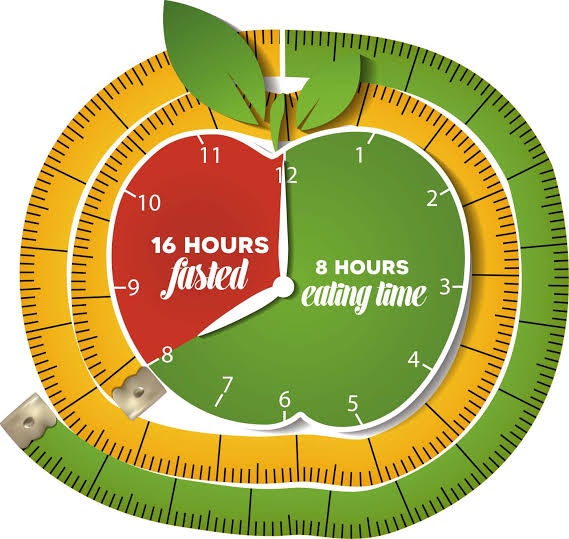
Intermittent fasting (IF) is an eating pattern that cycle between periods of fasting and eating. It’s currently very popular in the health and fitness community.
Methods:
The 16/8 method: Also called the Leangains protocol, it involves skipping breakfast and restricting your daily eating period to 8 hours. Then you fast for 16 hours in between.
Eat-Stop-Eat:
This involves fasting for 24 hours,once or twice a week,for example: not eating from dinner one day until dinner next day.
The 5:2 diet: With this methods, you consume only 500–600 calories on two non- consecutive days of the week, but eat normally the other 5 days.
How it affects your cells hormones:
When you fast, human growth hormone levels go up and insulin levels go down. Your body’s cells also change the expression of genes and initiate important cellular repair processes.
Weight lose:
Weight loss is the most common reason for people to try intermittent fasting .
•By making you eat fewer meals, intermittent fasting can lead to an automatic reduction in calorie intake. 2.Additionally, intermittent fasting changes hormone levels to facilitate weight loss. 3.In addition to lowering insulin and increasing growth hormone levels, it increases the release of the fat burning hormone norepinephrine (noradrenaline).
•Weight loss: As mentioned above, intermittent fasting can help you lose weight and belly fat, without having to consciously restrict calories Insulin resistance: Intermittent fasting can reduce insulin resistance, lowering blood sugar by 3–6% and fasting insulin levels by 20–31%, which should protect against type 2 diabetes .
• Inflammation: Some studies show reductions in markers of inflammation, a key driver of many chronic diseases • Heart health: Intermittent fasting may reduce “bad” LDL cholesterol, blood triglycerides, inflammatory markers, blood sugar and insulin resistance.
Suggested that intermittent fasting may prevent cancer
•Brain health: Intermittent fasting increases the brain hormones and may aid the growth of new nerve cells. It may also protect against Alzheimer’s disease.
If you have a medical condition, you should This is particularly important if you: Have diabetes. Have problems with blood sugar regulation. Have low blood pressure. Take medications. Are a woman who is trying to conceive. Are a woman with a history of amenorrhea. Are pregnant or breastfeeding.
Carbohydrates are the primary source of energy production in body tissues. When the body is deprived of carbohydrates due to reducing intake to less than 50g per day, insulin secretion is significantly reduced and the body enters a catabolic state,Glycogen stores deplete, forcing the body to go through certain metabolic changes. Two metabolic processes come into action when there is low carbohydrate availability in body tissues gluconeogenesis and ketogenesis.
Ketone bodies replace glucose as a primary source of energy. During ketogenesis due to blood glucose feedback.
Fatty acids are metabolized to acetoacetate which is later converted and acetone to beta-hydroxybutyrate.
Low carb and keto diet guide:
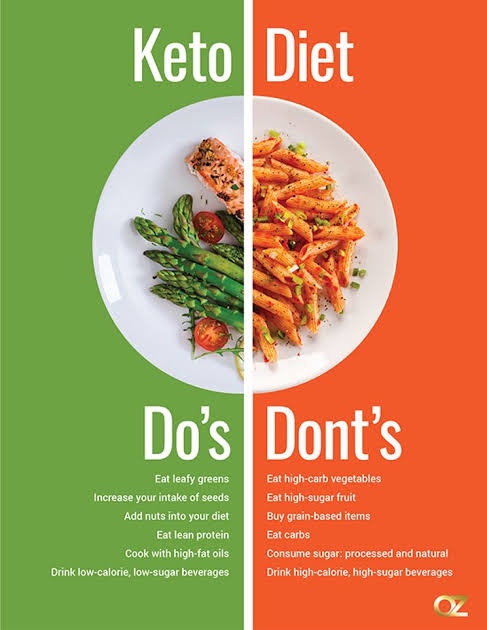
A ketogenic diet primarily consists of high-fats, moderate-proteins, and very-low-carbohydrates. The dietary macronutrients are divided into approximately 55% to 60% fat, 30% to 35% protein and 5% to 10% carbohydrates. amount up to 20 to 50 g per day.
The 20th century could have contributed to the increasing prevalence of obesity, a major risk factor for type 2 diabetes. The ketogenic diet has a long track record-not only in clinical medicine but also through human evolution-providing evidence for optimism in the search for more effective dietary prevention and treatment of chronic diseases.
Indications:
Experts on the ketogenic diet recommend it be strongly considered for children with uncontrolled epilepsy who have tried and failed two or three anticonvulsant drugs;
Autism.
Migraine.
Polycystic Ovary Syndrome.
Diabetes mellitus type 2.
Amyotrophic lateral sclerosis
Alzheimer’s disease.
Parkinson’s disease
High fat,low carbohydrate diet may improve brain function and memory in older adults.
Benefits of ketogenic diet:
Besides a positive effect on weight loss, studies have shown that low-carbohydrate ketogenic diets also reduce serum triglycerides and decrease in total cholesterol and increase in high-density lipoprotein cholesterol have also been reported.
Potential risk of ketogenic diet:
The keto diet is associated with potential increase in “bad”LDL cholesterol ,which is also linked to heart disease.
Liver problems
Kidney problems
Constipation
Mood swings
Low grade acidosis
Hypoglycemia
Dyslipidemia
Dehydration.
Electrolyte imbalance.
Conclusion:
Ketogenic diet has medical benefits for treatment of epilepsy in children and it may be used in management of obesity in short term under medical supervision because it has many complications in long term.
Nowadays there’s many people suffering from anemia due to many things, if the patient doesn’t care it could affects his quality of life .
Definition:
Anemia is present when there is reduction in number of RBCs & Hb content of blood with decreased O2 carrying capacity of blood in relation to age & sex. Other factors including pregnancy and altitudes also affect hemoglobin levels and must be taken into account when considering whether an individual is anemic.
Classification:
Etiological:
•Deficiency anaemia e.g. Iron↓ – Vit B 12 ↓ – Folic acid ↓ • Aplasticanaemia • Haemolyticanaemia. • Haemorrhagicanaemia.
Iron deficiency is the most common micronutrient deficiency worldwide. • Iron deficiency is the result of long term negative iron balance. Iron stores are progressively diminished and no longer meet the needs of normal iron turnover.
Iron metabolism :
Source: (absorbed better than non Heam iron, about 15% absorbable) Non Heam iron : legumes & Vegetables. (A bout 3% – 8% absorbable) Requirements:10 mg/day of which1 mg is absorbed.
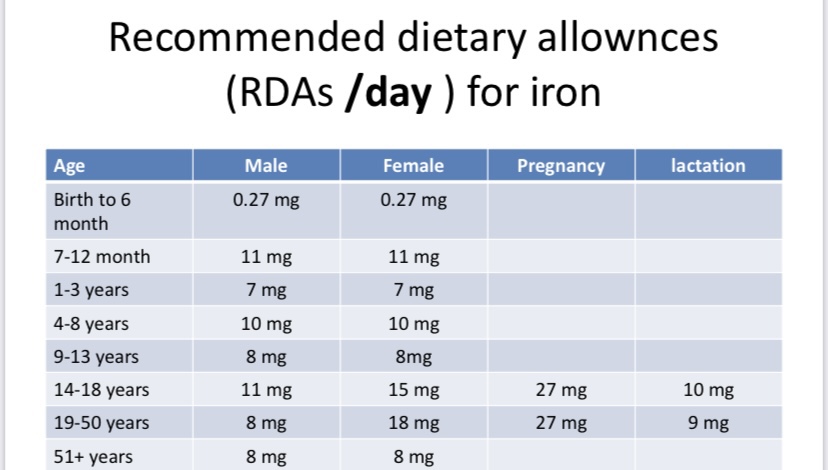
Absorption: ↑with vit C, ↓with phosphates, phytates , oxalic acids, excess ca and tannins •Amount of iron absorption depend on: iron status (absorption is more in iron deficient persons and during pregnancy and after blood loss). •Normal GIT function (HCL ↑ absorption) Type of iron in diet (Heam & non Heam) Dietary factors that ↑ or ↓ iron absorption.
Causes of iron deficiency Anemia:
Inadequate intake: • Infancy after 6m ( the American Academy of pediatrics recommended all exclusively breastfed infants should receive iron drops of 1 mg/kg/day at 4 months of age [22] to augment the low levels of iron in mother’s milk ). • anorexia. • Old age.
Fatigue, Headache, Faintness and Breathlessness • Pallor, angular stomatitis, red glazed shiny tenedr tongue • Palpitation, Tachycardia • Heart failure • Brittle nails, loss of luster and Koilonychia (spooning) • c/p of the cause: ankylostoma, GIT or Vaginal bleeding
To diagnose iron deficiency anemia:
•Serum iron : low 60 to 170 micrograms per deciliter (mcg/dL), or 10.74 to 30.43 micromoles per liter (micromol/L) • (TIBC ) A total iron-binding capacity test measures the blood’s ability to attach itself to iron and transport it around the body : increased 240 mcg/dL to 450 mcg/dL • Transferrin saturation*: low (s.iron/TIBC×100)(N: 25-50%) • Serum Ferritin : low For men, 24 to 336 micrograms per liter. For women, 11 to 307 micrograms per liter (a low serum ferritin level reflects depleted iron stores) • RDW (red cell distribution width) measures the differences in the volume and size of your red blood cells (erythrocytes) : increase (N R 12.2 to 16.1 percent in adult females and 11.8 to 14.5 percent in adult males ).
Management of Anaemia:
•Prevention of IDA • Treatment of the underlying cause • Iron therapy (supplement) 1)Oral iron (3-6 mg/kg/day)of elemental on empty stomach, if possible e.g: feroglobin cap 2)Parental iron • Dietary management. • General recommendations
1)Prevention of IDA:
•Full term infant are born with sufficient iron stores to prevent iron deficiency anemia for the first 4-5 months of life. • Baby should be breast fed colostrums and mature milk, both have 49% absorbable iron this is sufficient with available fetal stores till baby doubles the birth weight.
•Weaning foods :from 6 months onwards should have one iron rich dietary item and iron supplementation be given as recommended as nutritional iron deficiency is most common between 6-24 month of life. • Pregnant women: provide iron supplements during the last 2 trimester as daily iron requirements increase.
2)Treatment of the underlying cause:
Iron therapy (supplement) •Oral iron (3-6 mg/kg/day)of elemental, if possible e.g: feroglobin cap, ferrosanol cap The patient should be told that the stool will become dark with oral iron therapy.
Iron is best absorbed when taken on an empty stomach, with water or fruit juice (adults: full glass or 8 ounces; children: 1⁄2 glass or 4 ounces), about 1 hour before or 2 hours after meals. However, to lessen the possibility of stomach upset, iron may be taken with food or immediately after meals.
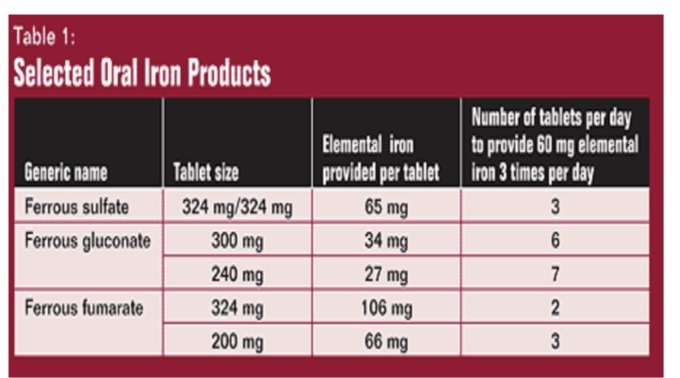
This is by ferrous sulfate 300 mg tab. (60 mg elemental iron/tab) Dose: 1 tab. T. d. s. (give about 200 mg elemental iron/D) It is best absorbed if given before meals but it is very irritant so it is given after meals vitaminC to increase its absorption. In case of iron intolerance give ferrous sulfate twice or shift to ferrous gluconate, if no response consider parental nutrition.
Oral iron supplement dose
Duration of therapy: •For 4 – 10 weeks till Hb becomes normal •Then smaller doses for about 3-6 months to replenish iron stores. Failure of oral iron: • Wrong diagnosis. • Failure to take tablets.. • Malabsorption. • Chronic hemorrhage. • Chronic infection.
Dietary management:
Dietary sources of iron: •Liver, red meat > poultry & fish •Plants are generally not good sources because of oxalate, phytate, tannins e.g green leafy vegetables, legumes, whole grains, dried fruits, molasses.
General recommendation:
•Combine heme and non heme iron foods together at the same meal to increase absorption of iron from non heme food. • Include vitamin c rich food together with iron rich foods (include in meal fruits juices as orange juice or another source of ascorbic acids as cabbage, carrots or cauliflower). • Include meat fish poultry at meals. •Soak beans for several hours in cold water before you cook them. • Decrease coffee and tea consumption and separate its drinking from 1-2 hours later. • Cooking non heme food in iron pots. • Change meal pattern (consume milk cheese and other dairy. product as snacks between meals rather than at meal time.
•Consume foods containing inhibitors at meals lowest in iron content, e.g a breakfast of a low iron cereal (bread or corn) consumed with tea or milk products; this meal pattern can provide adequate calcium without hampering iron nutrition.
Nowadays there’s many people suffering from anemia due to many things, if the patient doesn’t care it could affects his quality of life .
Definition:
Anemia is present when there is reduction in number of RBCs & Hb content of blood with decreased O2 carrying capacity of blood in relation to age & sex. Other factors including pregnancy and altitudes also affect hemoglobin levels and must be taken into account when considering whether an individual is anemic.
Classification:
Etiological:
•Deficiency anaemia e.g. Iron↓ – Vit B 12 ↓ – Folic acid ↓ • Aplasticanaemia • Haemolyticanaemia. • Haemorrhagicanaemia.
Iron deficiency is the most common micronutrient deficiency worldwide. • Iron deficiency is the result of long term negative iron balance. Iron stores are progressively diminished and no longer meet the needs of normal iron turnover.
Iron metabolism :
Source: (absorbed better than non Heam iron, about 15% absorbable) Non Heam iron : legumes & Vegetables. (A bout 3% – 8% absorbable) Requirements:10 mg/day of which1 mg is absorbed.
Absorption: ↑with vit C, ↓with phosphates, phytates , oxalic acids, excess ca and tannins •Amount of iron absorption depend on: iron status (absorption is more in iron deficient persons and during pregnancy and after blood loss). •Normal GIT function (HCL ↑ absorption) Type of iron in diet (Heam & non Heam) Dietary factors that ↑ or ↓ iron absorption.
Causes of iron deficiency Anemia:
Inadequate intake: • Infancy after 6m ( the American Academy of pediatrics recommended all exclusively breastfed infants should receive iron drops of 1 mg/kg/day at 4 months of age [22] to augment the low levels of iron in mother’s milk ). • anorexia. • Old age.
Fatigue, Headache, Faintness and Breathlessness • Pallor, angular stomatitis, red glazed shiny tenedr tongue • Palpitation, Tachycardia • Heart failure • Brittle nails, loss of luster and Koilonychia (spooning) • c/p of the cause: ankylostoma, GIT or Vaginal bleeding
To diagnose iron deficiency anemia:
•Serum iron : low 60 to 170 micrograms per deciliter (mcg/dL), or 10.74 to 30.43 micromoles per liter (micromol/L) • (TIBC ) A total iron-binding capacity test measures the blood’s ability to attach itself to iron and transport it around the body : increased 240 mcg/dL to 450 mcg/dL • Transferrin saturation*: low (s.iron/TIBC×100)(N: 25-50%) • Serum Ferritin : low For men, 24 to 336 micrograms per liter. For women, 11 to 307 micrograms per liter (a low serum ferritin level reflects depleted iron stores) • RDW (red cell distribution width) measures the differences in the volume and size of your red blood cells (erythrocytes) : increase (N R 12.2 to 16.1 percent in adult females and 11.8 to 14.5 percent in adult males ).
Management of Anaemia:
•Prevention of IDA • Treatment of the underlying cause • Iron therapy (supplement) 1)Oral iron (3-6 mg/kg/day)of elemental on empty stomach, if possible e.g: feroglobin cap 2)Parental iron • Dietary management. • General recommendations
1)Prevention of IDA:
•Full term infant are born with sufficient iron stores to prevent iron deficiency anemia for the first 4-5 months of life. • Baby should be breast fed colostrums and mature milk, both have 49% absorbable iron this is sufficient with available fetal stores till baby doubles the birth weight.
•Weaning foods :from 6 months onwards should have one iron rich dietary item and iron supplementation be given as recommended as nutritional iron deficiency is most common between 6-24 month of life. • Pregnant women: provide iron supplements during the last 2 trimester as daily iron requirements increase.
2)Treatment of the underlying cause:
Iron therapy (supplement) •Oral iron (3-6 mg/kg/day)of elemental, if possible e.g: feroglobin cap, ferrosanol cap The patient should be told that the stool will become dark with oral iron therapy.
Iron is best absorbed when taken on an empty stomach, with water or fruit juice (adults: full glass or 8 ounces; children: 1⁄2 glass or 4 ounces), about 1 hour before or 2 hours after meals. However, to lessen the possibility of stomach upset, iron may be taken with food or immediately after meals.
This is by ferrous sulfate 300 mg tab. (60 mg elemental iron/tab) Dose: 1 tab. T. d. s. (give about 200 mg elemental iron/D) It is best absorbed if given before meals but it is very irritant so it is given after meals vitaminC to increase its absorption. In case of iron intolerance give ferrous sulfate twice or shift to ferrous gluconate, if no response consider parental nutrition.
Oral iron supplement dose
Duration of therapy: •For 4 – 10 weeks till Hb becomes normal •Then smaller doses for about 3-6 months to replenish iron stores. Failure of oral iron: • Wrong diagnosis. • Failure to take tablets.. • Malabsorption. • Chronic hemorrhage. • Chronic infection.
Dietary management:
Dietary sources of iron: •Liver, red meat > poultry & fish •Plants are generally not good sources because of oxalate, phytate, tannins e.g green leafy vegetables, legumes, whole grains, dried fruits, molasses.
General recommendation:
•Combine heme and non heme iron foods together at the same meal to increase absorption of iron from non heme food. • Include vitamin c rich food together with iron rich foods (include in meal fruits juices as orange juice or another source of ascorbic acids as cabbage, carrots or cauliflower). • Include meat fish poultry at meals. •Soak beans for several hours in cold water before you cook them. • Decrease coffee and tea consumption and separate its drinking from 1-2 hours later. • Cooking non heme food in iron pots. • Change meal pattern (consume milk cheese and other dairy. product as snacks between meals rather than at meal time.
•Consume foods containing inhibitors at meals lowest in iron content, e.g a breakfast of a low iron cereal (bread or corn) consumed with tea or milk products; this meal pattern can provide adequate calcium without hampering iron nutrition.
Being A diabetic patient doesn’t mean that you forbid from any carbs, sweet’s….ex)But it means that you should control about your eating and life style .
What is diabetes?
high blood glucose concentrations (hyperglycemia) resulting from Defects in insulin secretion, insulin action, or both
Categories of diabetes:
Categories of Glucose Intolerance:
Prediabetes
Type‐1 Diabetes Miletus
Type‐2 Diabetes Miletus
Gestational Diabetes Miletus
Other categories: diabetes associated with specific genetic syndromes (such as neonatal diabetes and, genetic defects in insulin action, diseases of the exocrine pancreas (such as cystic fibrosis), endocrinopathies, (such as acromegaly or Cushing’s syndrome), drug or chemical induced ( treatment of HIV/AIDS or after organ transplantation), infections, and other illnesses.
Medical nutritional therapy:
Optimal control of diabetes requires the restoration of normal carbohydrate, protein, and fat metabolism.
Reduce calorie intake can lead to reductions in A1C of 0.3% to 2.0% in adults with T2DM and improvements in medication doses and quality of life.
weight loss interventions implemented in people with prediabetes and newly diagnosed with T2DM have been shown to be effective in improving glycemic control>weight.
loss diets are not sustainable.
Optimal control of diabetes requires the restoration of normal carbohydrate, protein, and fat metabolism.
• Through the collaborative development of individualized nutrition interventions and ongoing support of behavior changes, health care professionals can facilitate the achievement of health goals for the person with diabetes.
Eating pattern:
For only controlling blood glucose Patient should limit carbohydrates containing food Which is in many types of food like :
Dairy products (milk,yogurt)
Starchy products(white rice,bread,noodles..ex)
Fruits
Starchy vegetables (potatoes,corn,pees)
Carbohydrate intake:
Starches are rapidly metabolized into 100% glucose during digestion, in contrast to sucrose, which is metabolized into only approximately 50% glucose and approximately 50% fructose.
Fructose has a lower glycemic response, which has been attributed to its slow rate of absorption and its storage in the liver as glycogen.
Care should be taken to avoid excess energy intake and to avoid displacing nutrient dense food choices.
• People with or at risk for diabetes avoid sugar‐sweetened beverages (soft drinks, fruit drinks, energy and vitamin‐type water drinks containing sucrose, high fructose corn syrup, and/or fruit juice concentrates) to reduce the risk of worsening the cardio-metabolic risk profile and to prevent weight gain.
Carbohydrates counting:
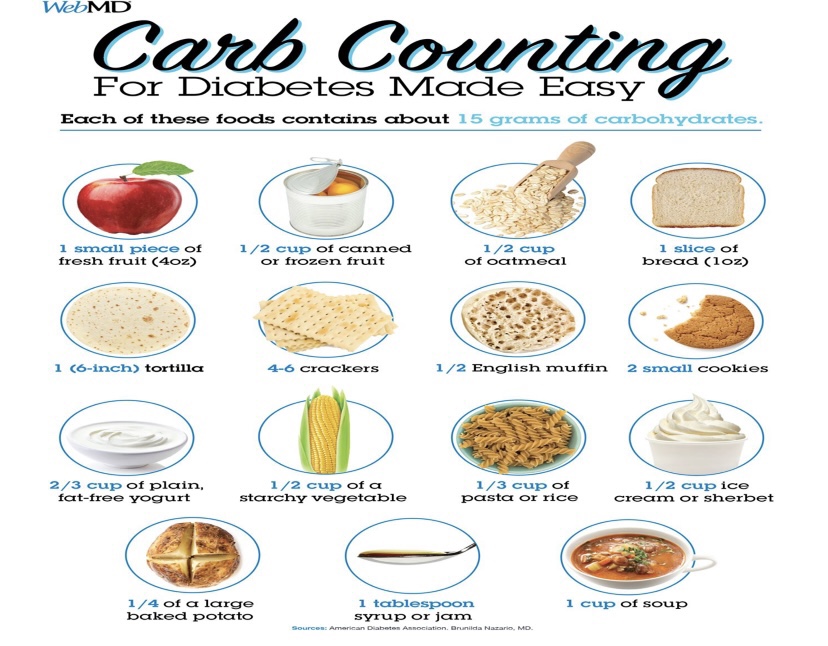
An eating plan method based on the principle that all types of carbohydrate (except fiber) are digested, and that the majority of carbohydrates are absorbed into the bloodstream as molecules of glucose.Carbohydrate foods include starches, such as breads, cereals, pasta, rice, beans and lentils, starchy vegetables, crackers, and snack chips; fruits and fruit juices; milk, milk substitutes, and yogurt; and sweets and desserts.One carbohydrate exchange (or serving) is a portion of food containing 15 grams of carbohydrate.
Carbs counting for diabetic patient
Micronutrients and herbal supplements:
Use of routine vitamin or mineral supplementation is not recommended in people with diabetes who do not have underlying deficiencies .Certain supplements may be helpful in lowering blood sugar levels :cinnamon, chromium, alpha‐lipoic acid (ALA), and berberine.
Cinnamon
Doses of 120 mg/day to 6 g/day for 4 to 18 weeks reduced levels of FPG,total cholesterol (–15.60 mg/dL), LDL cholesterol (–9.42 mg/dL), and triglycerides (–29.59 mg/dL) while increasing levels of HDL cholesterol (1.66 mg/dL).
Caution: when combining cinnamon (in pill form) with other blood glucose lowering herbs and supplements, as taking cinnamon with some antidiabetic drugs may cause hypoglycemic effects.
Berberine
An alkaloid found in a variety of medicinal plants (tree turmeric) Berberine significantly lowered FBG, A1C, triglyceride, and insulin levels in patients with T2DM similar to those of metformin and rosiglitazone.
• Liver function was improved greatly in these patients by showing reduction of liver enzymes treatment with berberine or metformin(0.5 g three times per day).
• After the 3 months, the hypoglycemic effect of berberine can be similar to that of metformin.
• Significant decreases in A1C ,FBG ,postprandial blood glucose (19.8 mmol/L to 11.1 mmol/L), and triglycerides.
Physical activity in diabetes:
Exercise guidelines:
The variability of glucose responses to exercise contributes to the difficulty in giving precise guidelines for exercising safely.
➢Frequent blood glucose monitoring before, during, and after exercise helps individuals identify their response to physical activities.
➢To meet their individual needs, it is important to modify general guidelines to reduce insulin doses before (or after) exercise.
Exercise recommendations:
Adults with diabetes should be advised to perform at least 150 min/week of moderate intensity aerobic physical activity spread over at least 3 days/week with no more than 2 consecutive days with physical activity.
•In the absence of contraindications, adults with T2DM should be encouraged to perform resistance exercise at least twice per week with each session consisting of at least one set of five or more different resistance exercises involving large muscle groups.
• There is an additive benefit of combined aerobic and resistance training in adults with T2DM.
• Children with diabetes or prediabetes should be encouraged to engage in at least 60 min/day of physical activity with vigorous muscle‐strengthening and bone‐strengthening activities at least 3 days/week
• High‐risk patients should be encouraged to start with short periods of low‐intensity exercise and increase the intensity and duration slowly.
Being A diabetic patient doesn’t mean that you forbid from any carbs, sweet’s….ex) But it means that you should control about your eating and life style…………….
 Healthy life